Nyt Wordle's Kennel
Wordle Game: A Deep Dive into the Viral Puzzle Phenomenon
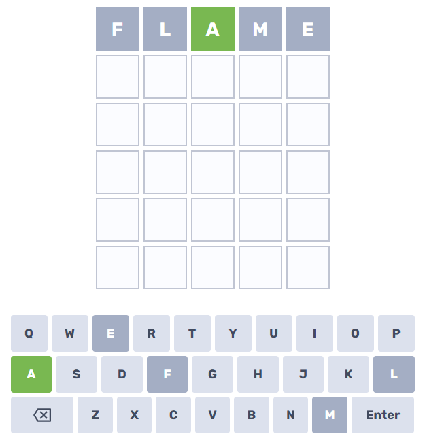
Wordle, a simple daily word-guessing game, exploded in popularity in late 2021 and has since become a cultural staple. Its appeal lies in an elegant combination of restriction and creativity: players get six attempts to guess a five-letter target word, receiving color-coded feedback each guess. Green indicates a correct letter in the correct spot; yellow signals a correct letter in the wrong spot; gray means the letter is absent. That minimal rule set gives rise to surprising strategic depth, social rituals, and debates about difficulty, fairness, and cultural impact.
Why Wordle resonates
Accessibility: No downloads, no ads (originally), and a single shared puzzle per day make
Wordle low-friction. It fits into a coffee break or commutes.
Social shareability: The post-game emoji grid (green/yellow/gray squares) allowed players to share results without spoiling the answer for others, fuelling viral spread across social platforms.
Finite, shared experience: Everyone plays the same puzzle daily, creating collective anticipation and conversation—like a micro cultural event.
Cognitive satisfaction: The puzzle blends deduction, pattern recognition and vocabulary knowledge, producing the "aha" feeling when the answer clicks.
Strategies and skill Wordle rewards pattern-based reasoning and probabilistic thinking. Common strategies include:
Strong starting words: Players often start with words covering frequent vowels and consonants (e.g., AUDIO, ADIEU, SLATE). Research into letter frequency and positional frequency supports selecting words that maximize information early.
Entropy-driven play: Some players choose guesses not for potential correctness but to eliminate many possibilities—an information-theory approach.
Adaptive narrowing: Using feedback to constrain the candidate set efficiently, balancing attempts between testing new letters and confirming placements.
Critiques and counterarguments
Vocabulary bias: Wordle favors speakers of certain dialects and those familiar with less-common words. The official word list includes obscure terms, producing frustration and accusations of elitism.
Monotony and limits: The single daily puzzle makes play ritualistic; some players want more puzzles or variants. Conversely, scarcity is part of the charm and helps prevent burnout.
Competitive vs. casual divide: Leaderboards and streaks can shift play from relaxed enjoyment to pressure-driven behavior. Some argue this reduces intrinsic pleasure and increases anxiety.
Accessibility issues: The color-based feedback can be problematic for color-blind players; though many clients add patterns or alternate displays, the original design requires adaptation.
Variants and influence Wordle spurred a host of spin-offs and adaptations, reflecting different tastes and goals:
Different word lengths or multiple daily puzzles (e.g., Dordle, Quordle).
Thematic variants: Nerdle (math-equation guessing), Lewdle (adult vocabulary), and Absurdle (adversarial gameplay
Game Time
Welcome Guest
Sponsored Links

 Help
Help Search
 Chat
Chat Market
 Atlas
Atlas Kennel
 Back to Top